Berkeley has some of the oldest housing stock in the East Bay, and many of these homes still have knob-and-tube wiring. Most people never think about it until it comes up. Usually that's during a home sale, a remodel, or when the insurance company or a home inspector flags it. Then all of a sudden it's a problem that needs an answer.
I deal with insurance jobs like this every single day, so here's a straight explanation of what knob-and-tube is and why people suddenly care about it, and what dealing with it actually looks like.
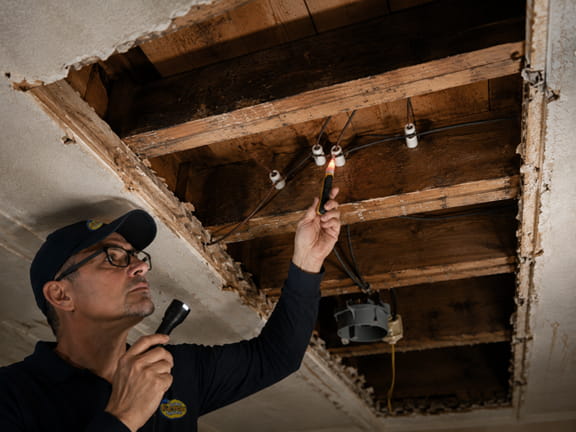
What knob-and-tube wiring is
Knob-and-tube is the wiring method used in a lot of homes built before the 1950s. You can spot it by the ceramic knobs that hold the wires away from the wood framing and the ceramic tubes where wires pass through joists. When it was installed it was fine for the era. The problem is that these homes were wired for a few light fixtures and maybe a radio, not for the electrical load a modern house puts on.
Why it gets flagged
A few reasons. The wiring has no ground, which today's outlets and appliances expect. The insulation on the old conductors gets brittle and breaks down after this many decades. And knob-and-tube is easy to overload, which is where the heat and fire risk comes in. On top of that, people over the years have often added onto it or buried it under insulation, which the system was never designed for and which makes it run hotter. That combination is why insurers and inspectors don't like seeing it.
The insurance side of it
This is the part that surprises people. Knob-and-tube is pretty much uninsurable at this point. A lot of folks tell me, "but I have home insurance," and here's the catch. If you read the fine print, a lot of policies don't cover knob-and-tube. So you're paying your premium, but if the house has a fire and they find knob-and-tube in it, you can end up fighting over whether it's covered at all.
Things really changed with the insurance companies after the Camp Fire. Over the last couple of years I've watched insurers get much stricter about old wiring and out-of-date panels. Some of them will write you a policy, then ask for photos a month later and give you a short window to fix what they flag or lose coverage. It's not right and it's not fun, but it's the world we're working in right now, and it's why I get so many of these calls.
Do you have to replace all of it?
Not always all at once, and that's an honest answer, not a sales pitch. Some homes have a little bit left in one part of the house. Others are wired with it top to bottom. What needs to happen depends on how much is left, what condition it's in, and what's driving the question. An insurance requirement is different from a full remodel. The only way to know is to look at what's actually in your walls, which is why I go out and check before telling anyone what they need.
What a rewire actually involves
Replacing knob-and-tube means running new wiring to replace the old runs, and the hard part in these old homes is how many walls you have to open to get every wire in. A lot of Berkeley houses have lath and plaster walls, not drywall, and that makes it trickier to open things up and route new wire without tearing up more than necessary. Tyler handles most of our Berkeley rewiring work and he's good at exactly that, knowing how these old homes are put together and finding the path that does the least damage.
On the wall repair afterward, we have the customer bring in a drywall and plaster contractor to close everything back up. I can refer one I trust. We pull the permit, coordinate the inspection, and make sure the finished electrical work is up to current code.
Dealing with knob-and-tube in your Berkeley home?
I'm Matt, owner of East Bay Electrician Services. Whether it's an insurance letter, a home sale, or a remodel that surfaced it, the first step is finding out how much knob-and-tube is actually in the house and what condition it's in. I'll take a look and give you a straight answer.
If you need a Berkeley electrician to look at knob-and-tube wiring, call me at (510) 467-0856. You can also read more about our whole home rewiring work, since dealing with knob-and-tube usually means rewiring the affected areas.
📞 Call (510) 467-0856